
Stock is assigned to trays
Products, parts, tools or totes are stored in tray locations suited to their size and load.
Modula · automated vertical storage
Modula’s automated vertical storage systems store products in trays or bins, then bring the requested stock to an operator at a working-height access point.
They may be worth exploring when storage is spreading, walking is consuming time or frequently used stock is difficult to access consistently. Product mix, building height, load, throughput and integration still determine whether the fit is practical.
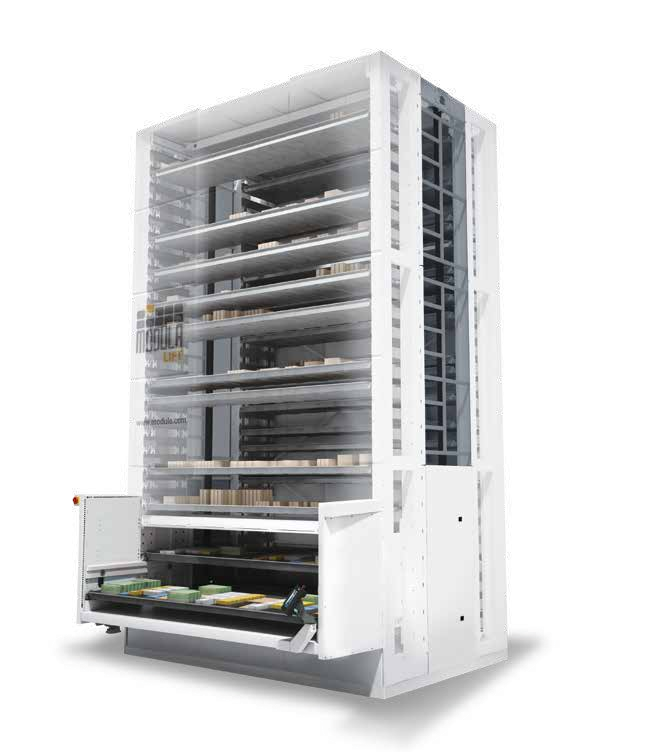 Image: Modula
The basic storage cycle
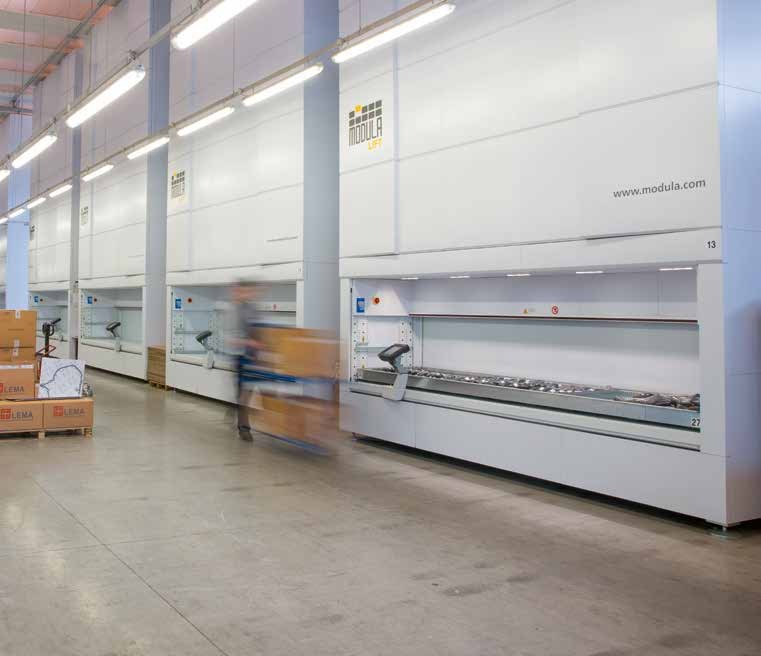
A vertical lift module (VLM) is essentially a tall, enclosed bank of trays with an automated lift in the centre. The important change is not the machine itself; it is the removal of repeated travel between the operator and the stock.
Products, parts, tools or totes are stored in tray locations suited to their size and load.
A touchscreen, barcode scan or connected warehouse system identifies the required tray.
The internal lift brings the tray to an access bay at a consistent working height.
The operator picks or replenishes the item, then the tray returns to storage for the next request.
The Modula range
All four models use vertical space and bring stock to an access point. The main difference is what each one is designed to prioritise.
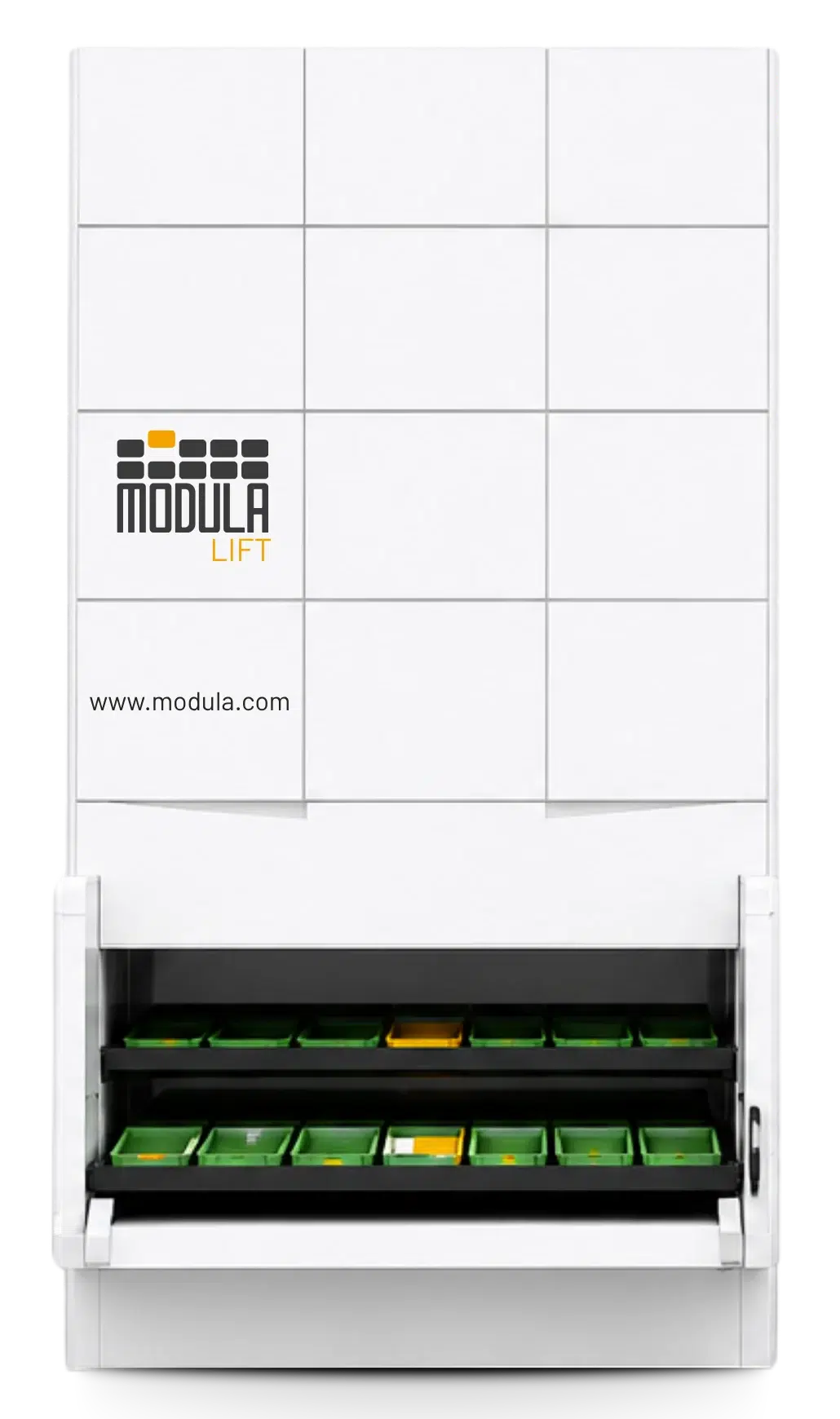
The broad starting point
A configurable vertical lift module (VLM) for mixed inventory such as components, spare parts, tools, cartons and totes.
Best considered when: general storage is consuming floor area and repeated travel to stock is part of the daily workflow.
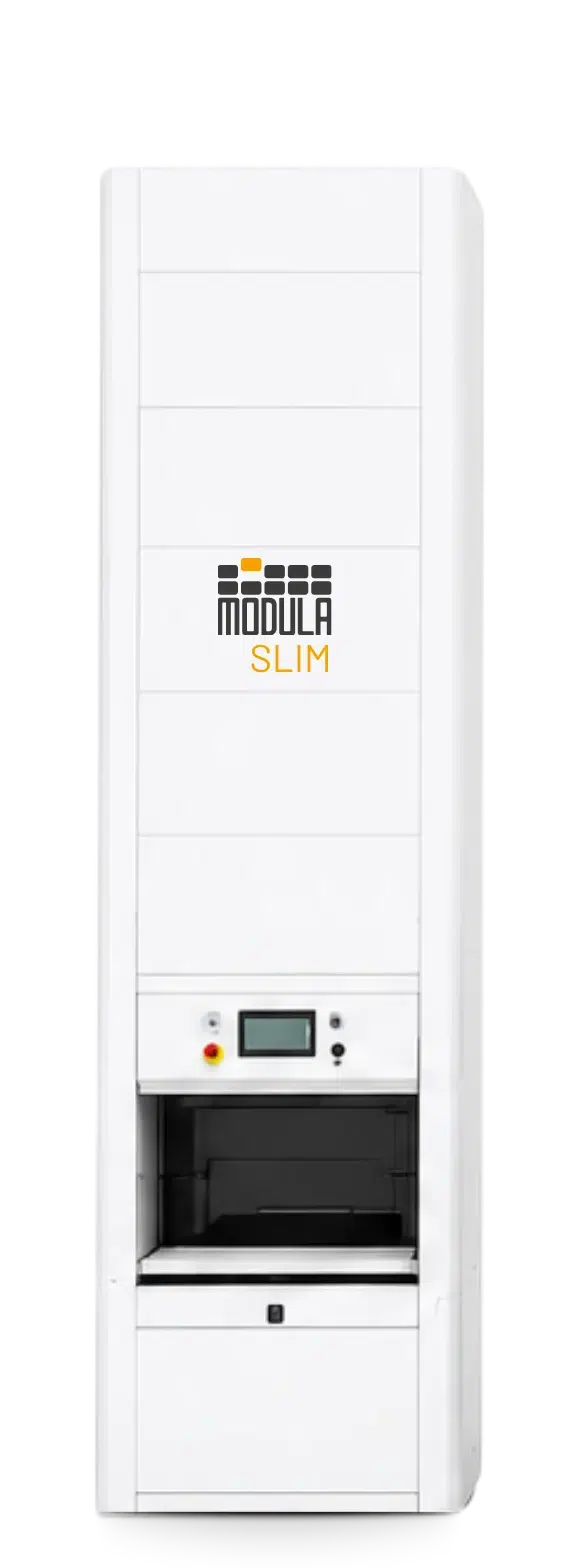
Vertical storage in less floor area
A narrower VLM designed for sites that want automated tray storage but have very limited floor space.
Best considered when: a full-size VLM is difficult to place, but storage density and access still need to improve.
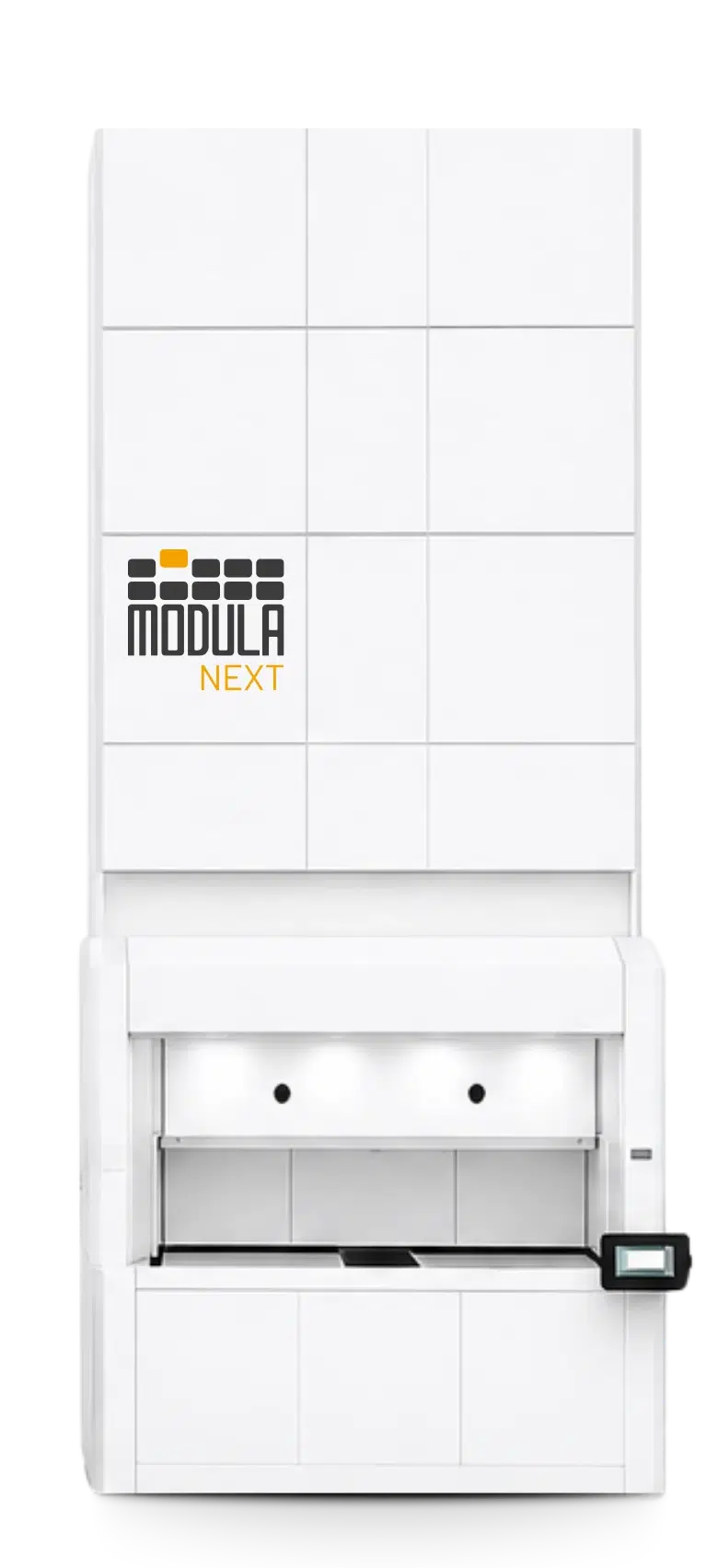
Access to the correct compartment
A controlled-access VLM that presents the tray but only opens the specific compartment required for the pick.
Best considered when: similar, sensitive or high-value items need tighter picking control and traceable access.
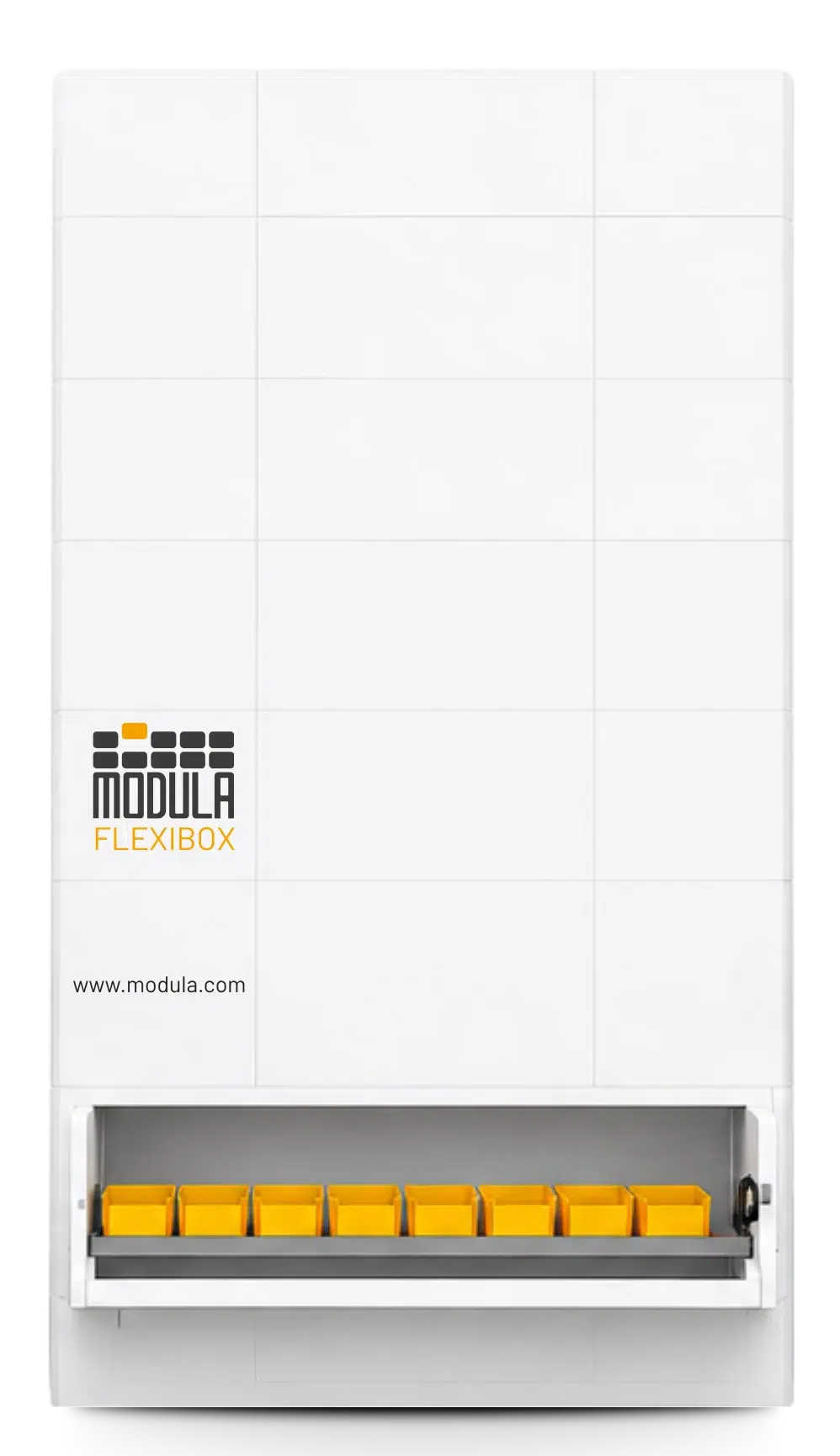
Higher-volume bin presentation
A bin-based rather than tray-based system designed for faster, repeated picking where order volume and access to many SKUs are the main pressures.
Best considered when: distribution or fulfilment work needs bins presented quickly and in a sequence that supports ongoing order picking.
Product images: Modula Asia.
A quick fit check
A vertical lift module (VLM) is worth a closer look when at least one of these is a real operating constraint, not simply because there is unused height.
Storage is consuming area needed for production, dispatch or more inventory.
Walking, searching, bending or climbing repeats throughout the shift.
Picking errors, security or traceability matter for the items being stored.
A stronger case usually exists when one or more of these pressures is recurring, measurable and costly enough to solve. If they are minor, another approach may be more practical.
Software and planning
Modula systems can be operated through a touchscreen and barcode scanning. Modula warehouse software can manage item locations, picking, replenishment and inventory, with integration into existing business or warehouse systems where required.
The exact control and integration approach should be scoped early. A useful first conversation needs only a few practical inputs:
Commercial disclosure
Atomic Inertia can introduce Modula when a vertical storage system appears relevant. If an introduced Modula opportunity proceeds, the supplier pays Atomic Inertia a referral commission from its normal price; Atomic Inertia does not add a separate fee to the warehouse. The next step is to test the fit against the operation, not assume the product belongs there.