
An order creates demand
The warehouse or execution system identifies the items and storage pods required.
Mushiny · AMR shelf-to-person
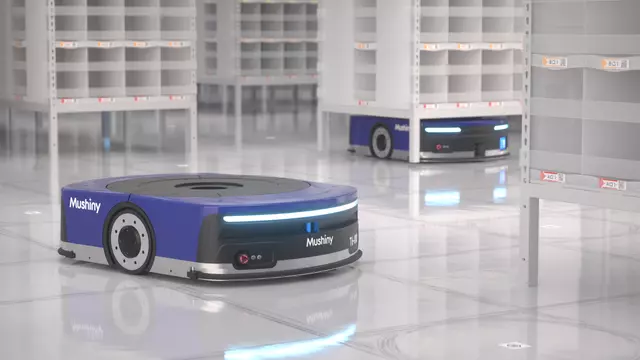
Shelf-to-person uses autonomous mobile robots to bring movable pods or shelves to a stationary picking position, changing repeated warehouse walking into a controlled goods-to-person flow.
The robot is only the visible part. Storage design, workstation flow, replenishment, safety and software orchestration determine whether the complete system performs.
The basic picking cycle
Instead of walking an aisle to find each SKU, the operator works at a defined station while the control system sequences the required shelves and robot tasks.
The warehouse or execution system identifies the items and storage pods required.
The fleet manager assigns an available AMR and plans its route through the storage area.
The robot moves beneath the pod, lifts it and transports it to the nominated station.
The operator picks or replenishes, confirms the task and the pod returns to storage.
A stronger fit
A weaker fit
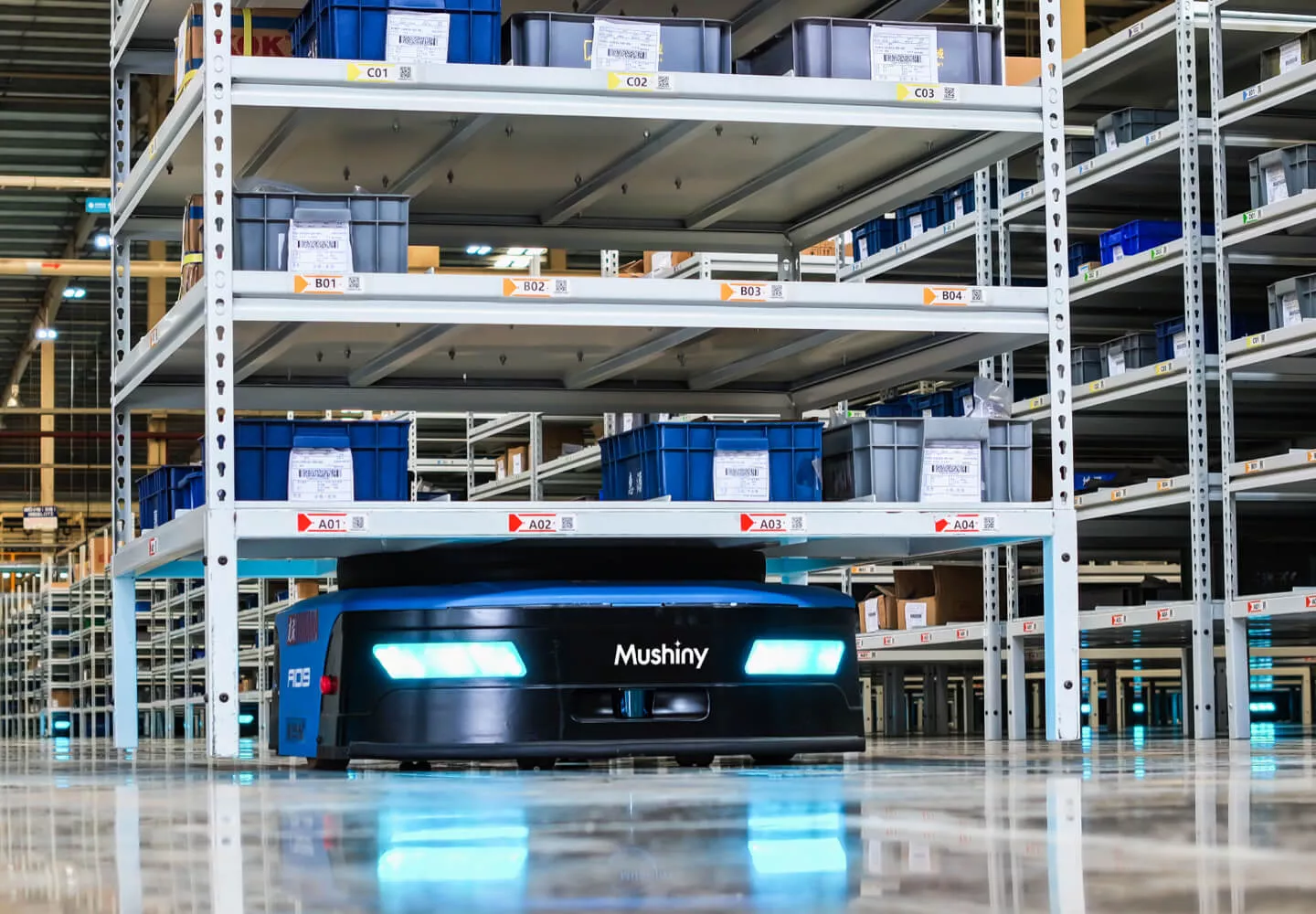 Image: Mushiny
More than mobile hardware
Mushiny’s iRES execution software coordinates orders, pod selection, robot traffic and workstation activity while connecting with the warehouse system. The physical design then determines storage density, travel distance, station ergonomics and safe movement.
Shelf-to-person
Best understood as mobile shelving: an AMR transports the required pod or shelf to the operator. It can suit mixed item sizes and conventional shelving logic.
A distinct alternative
Tote-based systems retrieve individual containers from denser storage structures. They may offer different density and throughput, but should be evaluated as a separate solution rather than treated as the same AMR workflow.
The connected Mushiny workflow
The products can connect, but each stage should solve a real operating constraint on its own merits.
Commercial disclosure
Atomic Inertia can introduce Mushiny when the solution appears relevant. If an introduced Mushiny opportunity proceeds, Mushiny pays Atomic Inertia a referral fee from its normal price. It does not increase the customer’s price, including if the customer approaches Mushiny directly. The next step is to test the fit against the operation.