
Induct the item
A picked item is scanned or identified at the induction position.
Mushiny · compact put-order sorting
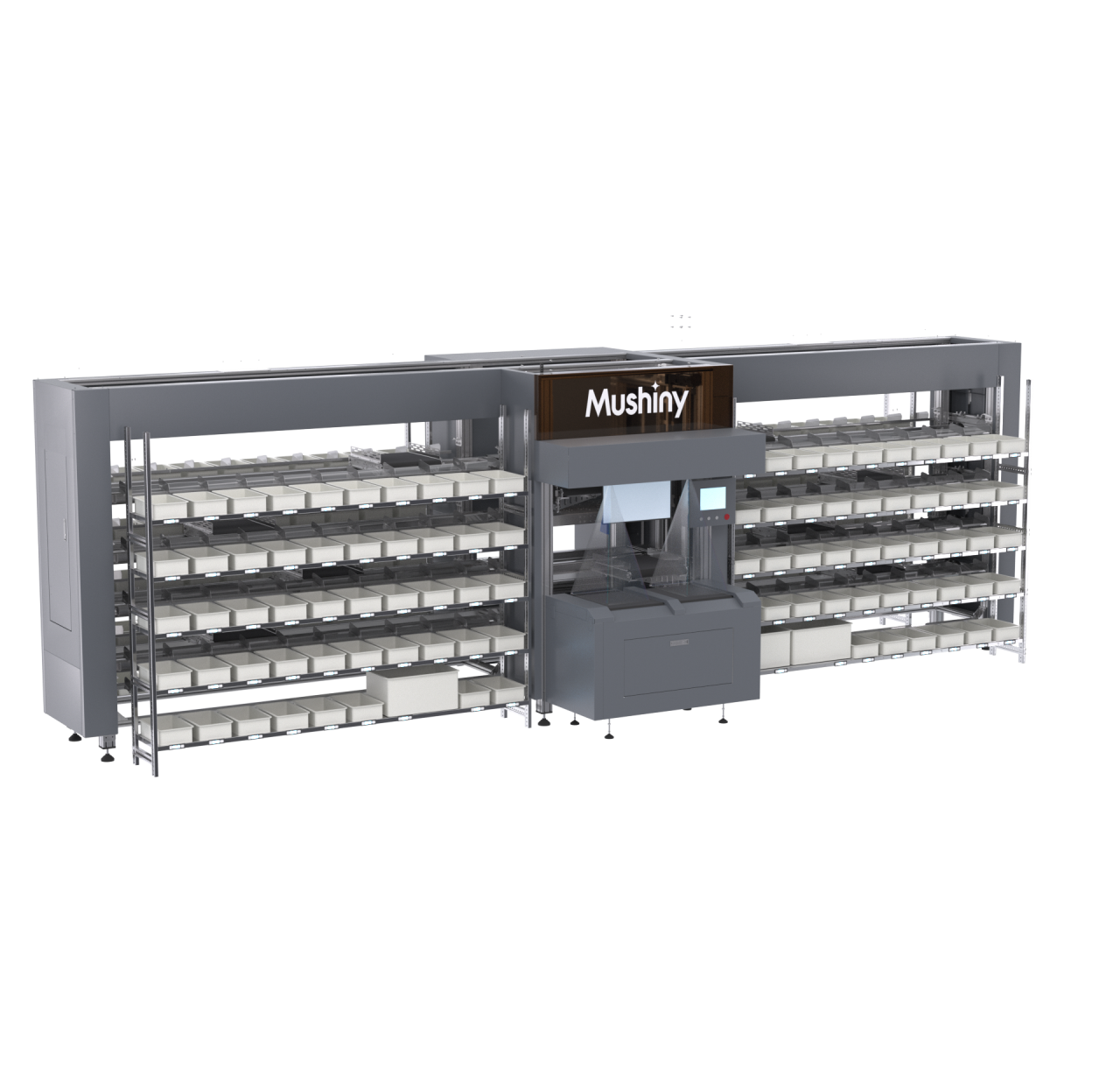
The 3D Sorter Mini routes picked items into a compact vertical and horizontal grid, helping consolidate multi-item orders without relying on a long manual put wall.
It is most relevant when order sorting is creating labour, space or dispatch pressure. The number of destinations, induction flow and completed-order handling still shape the real result.
The basic sortation cycle
The Mini acts like an automated put wall: it identifies the item or order destination, moves the item through the grid and releases it into the correct order location.
A picked item is scanned or identified at the induction position.
The connected system determines which order, return stream, store or region needs it.
The sorter moves vertically and horizontally to the assigned destination.
Consolidated orders are removed and the destination becomes available again.
A stronger fit
A weaker fit
 Image: Mushiny
Configurable around the job
Mushiny supports single- or double-sided layouts, customisable slot sizes and counts, and dual induction positions. The system can connect with WMS, WCS, ERP or MES software and support both forward and reverse logistics.
Forward fulfilment
Batch-picked or zone-picked items can be routed into individual order destinations before the completed order moves to packing.
Reverse and store flows
The same core sorting logic can direct returns, store replenishment, regional allocation or other destination-based flows when the item profile suits the machine.
The connected Mushiny workflow
The Mini can connect a goods-to-person picking process with automated satchel packing, but it can also operate beside conventional shelving and manual processes.
Commercial disclosure
Atomic Inertia can introduce Mushiny when the solution appears relevant. If an introduced Mushiny opportunity proceeds, Mushiny pays Atomic Inertia a referral fee from its normal price. It does not increase the customer’s price, including if the customer approaches Mushiny directly. The next step is to test the fit against the operation.